
Short answer: No.
Long answer: Absolutely not. In fact, thinking you need to “get in shape first” is probably the number one reason people never start training.
Let me tell you something that might surprise you: some of the most successful BJJ students I’ve coached at Partizan Grappling in Sydney walked through the door carrying an extra 20kg, unable to do a single push-up, and hadn’t exercised regularly in years.
Six months later? They’re training three times per week, submitted their first opponent, and can’t imagine their life without grappling.
Here’s what actually matters when you start BJJ: showing up.
That’s it. That’s the whole secret.
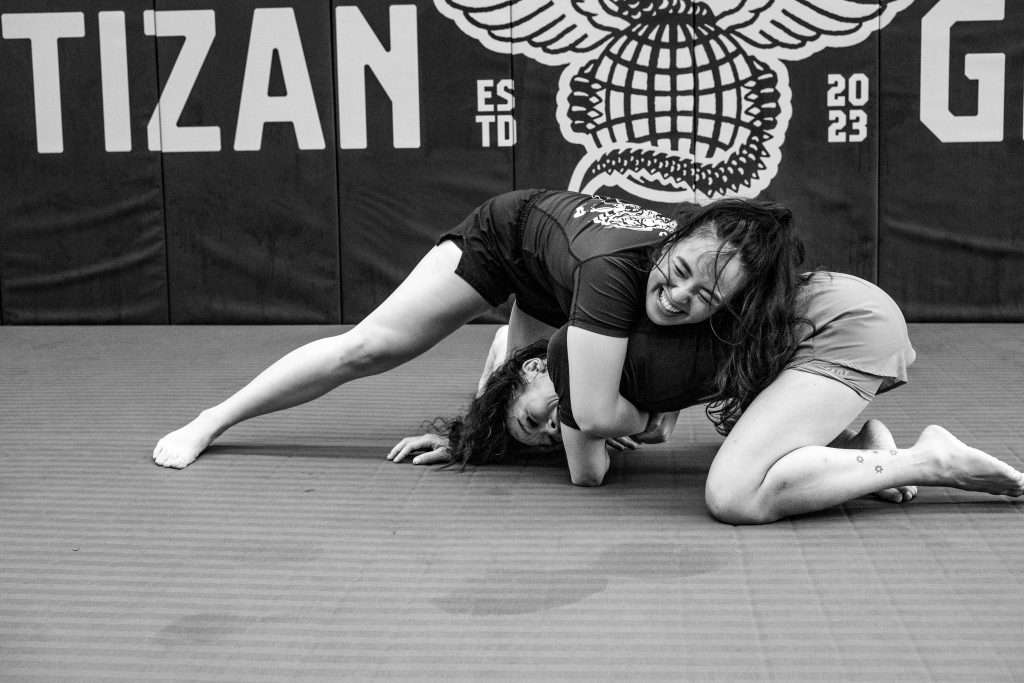
The “I’ll Get Fit First” Trap
I hear this constantly:
“I’ll start training once I lose some weight.” “Let me get my cardio up first, then I’ll try a class.” “I need to do a few months of strength training before I walk into a BJJ gym.”
Here’s what actually happens: you never start.
You tell yourself you’ll start training once you’re “ready,” but that day never comes because there’s always another excuse, another reason to delay.
Meanwhile, someone less fit than you walks into a grappling academy on day one, gets absolutely destroyed, comes back anyway, and six months later they’re tapping people out while you’re still “getting ready.”
Here’s the uncomfortable truth: you don’t get fit to start BJJ. You start BJJ to get fit.
What Your First Class Actually Looks Like
So what does this actually look like in practice?
Let me paint you an honest picture of your first jiu jitsu class.
You’ll be nervous. Everyone is nervous their first time. The people who look calm? They’re faking it.
First, you’ll learn a warmup. It might include some shrimping, some breakfalls, some basic movement drills. If you can’t do them perfectly, that’s fine. Nobody expects you to.
Then you’ll learn a technique or two. The instructor will demonstrate. You’ll practice with a partner. You’ll probably forget the steps immediately. That’s also fine. So does everyone.
After that, you might do some light positional sparring—starting from a specific position and working from there. Your training partner will go easy on you. They remember what it was like to be new.
Then you’ll sit there during the live rounds, watching others train while you catch your breath and process what you just experienced.
That’s it. That’s the first class.
No one expects you to go five-minute rounds with a purple belt. No one expects you to remember every detail. No one expects you to be fit.
If you’re curious about the exact structure of a first class, I’ve written a detailed walkthrough of what to expect at your first BJJ class.
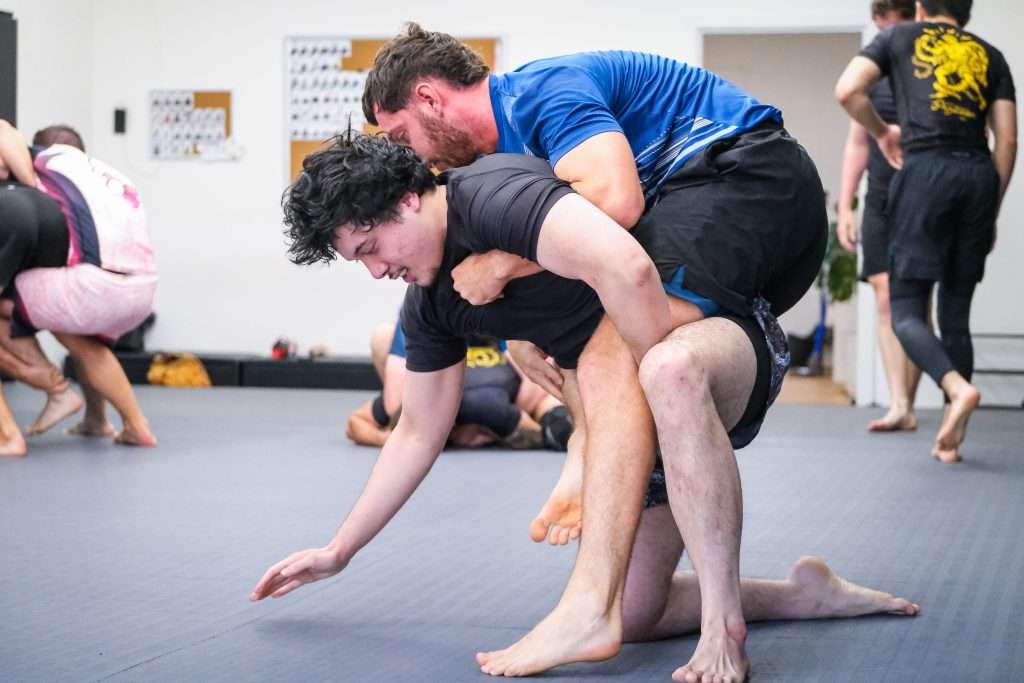
The Fitness You Actually Need
Here’s the baseline fitness requirement for starting BJJ: can you show up to the gym?
If you answered yes, you’re fit enough.
I’m not being flippant. I’m serious.
I’ve had complete beginners start training at 50+ years old, carrying significant extra weight, with pre-existing injuries. They all made it work because they showed up consistently and trained within their capabilities.
The beautiful thing about BJJ is that it scales infinitely. You control the intensity. You tap when you need to. You sit out rounds when you’re gassed. You communicate with your training partners about your pace and limitations.
A good grappling academy will meet you where you are. The coaches will modify exercises. Your training partners will adjust their intensity. Nobody is trying to kill you on day one.
BJJ Will Get You Fit (Whether You Like It or Not)
Here’s what actually happens when unfit people start training:
Week 1-2: You’re exhausted after every class. Your muscles hurt in places you didn’t know you had muscles. You might feel discouraged.
Week 3-4: You can finish a whole class without feeling like you’re dying. The soreness is less intense. You start recognizing techniques.
Month 2: You notice your cardio improving. You’re not gasping for air after the warmup anymore. You can do more rounds before you need to sit out.
Month 3-6: You’ve lost weight without trying. Your resting heart rate is lower. You move better. Someone mentions you look different. You probably are different.
Month 6+: You’re training 3-4 times per week and it’s just part of your routine. You don’t even think about fitness anymore. You’re just a person who does jiu jitsu.
This progression happens naturally. You don’t need to force it. You don’t need a separate fitness program. BJJ is the fitness program.
What matters isn’t your starting point—it’s what we call “mat fitness.” The specific conditioning that comes from doing the movements of jiu jitsu itself. You can’t get that from running or lifting. You get it from shrimping, bridging, and rolling.
The Real Barriers (And How to Overcome Them)
The actual challenges beginners face have nothing to do with fitness:
Challenge #1: Ego
You’re going to suck. Badly. For months. A 60kg blue belt will tie you in knots. A teenager half your size will submit you repeatedly.
This isn’t because you’re unfit. It’s because they know jiu jitsu and you don’t.
The people who quit aren’t the unfit ones—they’re the ones who can’t handle being a beginner.
Challenge #2: Consistency
The difference between people who make progress and people who don’t isn’t starting fitness level. It’s whether they show up twice per week for six months straight.
If you train once per month, you’ll always be a beginner, fit or not. If you train twice per week, you’ll make progress regardless of your starting point.
Challenge #3: Expectations
If you expect to walk in and dominate because you lift weights or played rugby in high school, you’ll be disappointed.
If you expect to learn a skill that takes years to develop, you’ll be fine.
What Actually Matters More Than Fitness
So here’s what separates successful BJJ students from those who quit:
Consistency over intensity. Two classes per week for a year beats four classes per week for two months.
Humility over pride. Being willing to tap, ask questions, and accept that you suck right now.
Long-term thinking. Understanding that this is a marathon, not a sprint. Black belts take 10+ years, not 10 months.
Enjoyment of the process. If you hate every second of training, you won’t stick with it. Find a gym where you actually enjoy showing up.
None of these have anything to do with how many burpees you can do.
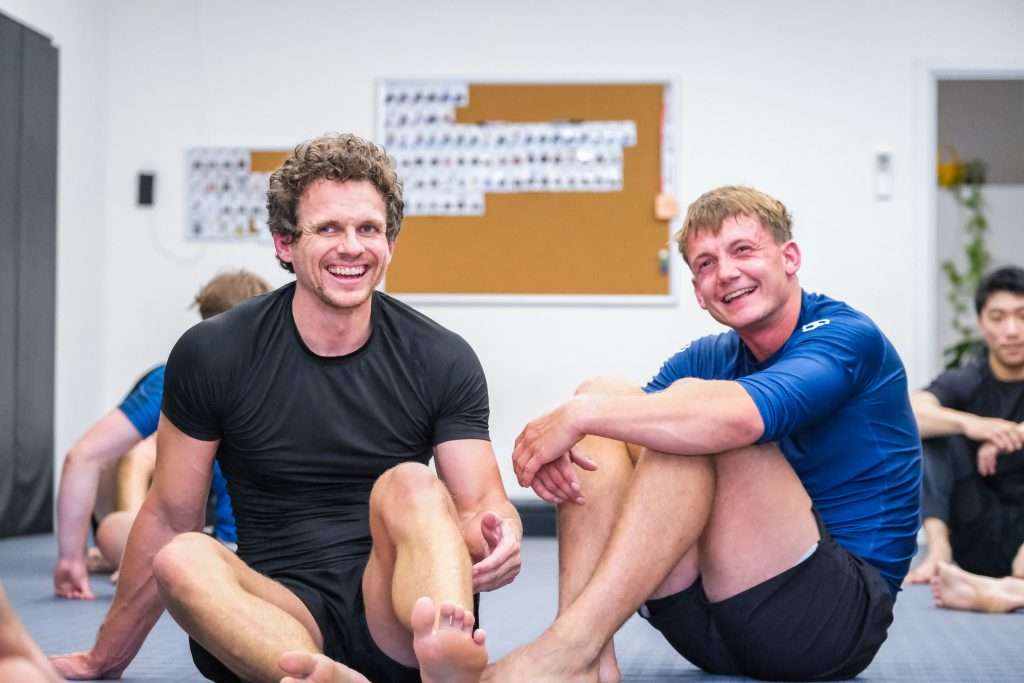
The Exception: Pre-Existing Injuries
The one legitimate reason to prepare before starting is if you have a specific injury or condition that needs addressing.
If you have a bad knee, weak shoulders, or chronic back pain, it’s smart to see a physio first. Get their clearance. Ask about modifications. Then start training with that context.
But “I’m out of shape” isn’t an injury. It’s not a barrier. It’s an excuse.
How to Actually Start (The Right Way)
If you’re ready to stop making excuses, here’s what to do:
1. Pick a gym based on location. Seriously. The best grappling academy is the one you’ll actually attend. Don’t drive 45 minutes to the “best” gym when there’s a great one 15 minutes away.
If you’re near UNSW, Kingsford, Randwick, or anywhere in Sydney’s Eastern Suburbs, Partizan is 10 minutes from campus with plenty of street parking. But the principle applies everywhere – proximity beats prestige when it comes to consistency.
2. Book a trial class. Most gyms offer free or cheap trials. Just book one. Don’t overthink it.
3. Show up in comfortable clothes. Shorts and a t-shirt. That’s it. No pockets or zippers ideally, but for your first class, just wear whatever athletic gear you have.
4. Tell the instructor you’re brand new. They’ll pair you with someone appropriate and keep an eye on you.
5. Survive the first class. You don’t need to be good. You don’t need to remember everything. You just need to finish.
6. Book your second class immediately. The gap between class one and class two is where most people quit. Don’t give yourself time to talk yourself out of it.
What If I’m REALLY Out of Shape?
Let’s address the elephant in the room. What if you’re significantly overweight, elderly, or haven’t exercised in decades?
The answer doesn’t change: you can still start.
But here’s what you should do differently:
Tell the instructor about your concerns. Any competent coach will work with your limitations. We’ve had members with significant mobility issues, prior injuries, and various health conditions. Good gyms modify the training to suit them.
Start with one class per week. Don’t try to be a hero. Let your body adapt. Add a second class after a month or two.
Focus on technique over intensity. During live sparring, tell your partner you want to go light. Work on positions, not submissions. Flow, don’t force.
Give it three months. The first month is brutal for everyone. The second month is where you start feeling human. The third month is where it clicks.
If you quit after two classes because you’re tired, you quit before the actual benefits kicked in.
[PHOTO 8: Older beginner (40s-50s) or clearly non-athletic person training successfully with a partner, both smiling or engaged. Caption: “Age and starting fitness don’t determine who succeeds – attitude and consistency do”]
The People Who Actually Quit
In my experience running a grappling academy, the people who quit aren’t the unfit ones.
They’re the ones who:
- Show up once, get submitted repeatedly, and never come back
- Train inconsistently (once per month) and wonder why they’re not improving
- Have ego problems and can’t handle being a beginner
- Pick a gym that’s 45 minutes away and slowly stop making the drive
- Never build relationships with other members, so there’s no social pull to return
Notice what’s not on that list? Starting fitness level.
Training Frequency: What Actually Works
One practical question: how often should you train as an unfit beginner?
Week 1-4: Start with 1-2 classes per week. Your body needs recovery time.
Month 2-3: Add a third class if you’re recovering well. Most people plateau here, and that’s fine.
Month 4+: Train as often as your schedule and recovery allow. 3-4 times per week is the sweet spot for steady progress.
More isn’t always better. A 40-year-old training twice per week consistently will progress faster than someone doing five classes per week for two months before burning out.
At Partizan, our intro program is specifically designed for this ramp-up period, capping class sizes so coaches can give individual attention to newer students who are still building their base fitness and learning to move safely.
Frequently Asked Questions
Still have questions? Here are the most common concerns I hear.
Do I need to lose weight before starting BJJ?
No. You’ll lose weight naturally through training. Starting now gets you to your goals faster than waiting. Most beginners who train consistently lose 5-10kg in their first six months without changing their diet.
What if I can’t keep up in class?
You control the pace. Tap out when needed, sit out rounds when you’re gassed, and communicate with partners about intensity. Every experienced grappler remembers being exactly where you are.
How long before BJJ gets me in shape?
Most beginners notice significant cardio improvement by week 3-4. By month 2, you can complete full classes. By month 3-6, you see visible body composition changes and strength gains.
I’m over 40/50/60. Am I too old to start?
No. BJJ has a thriving masters division. Many people start in their 40s and 50s. You’ll just need to be smarter about recovery and training frequency. Listen to your body and don’t try to keep up with 20-year-olds.
Should I do strength training alongside BJJ?
Not at first. Let your body adapt to BJJ first. After 2-3 months, if you want to add supplemental work, focus on mobility and light strength training. But BJJ itself is enough for most people’s fitness goals.
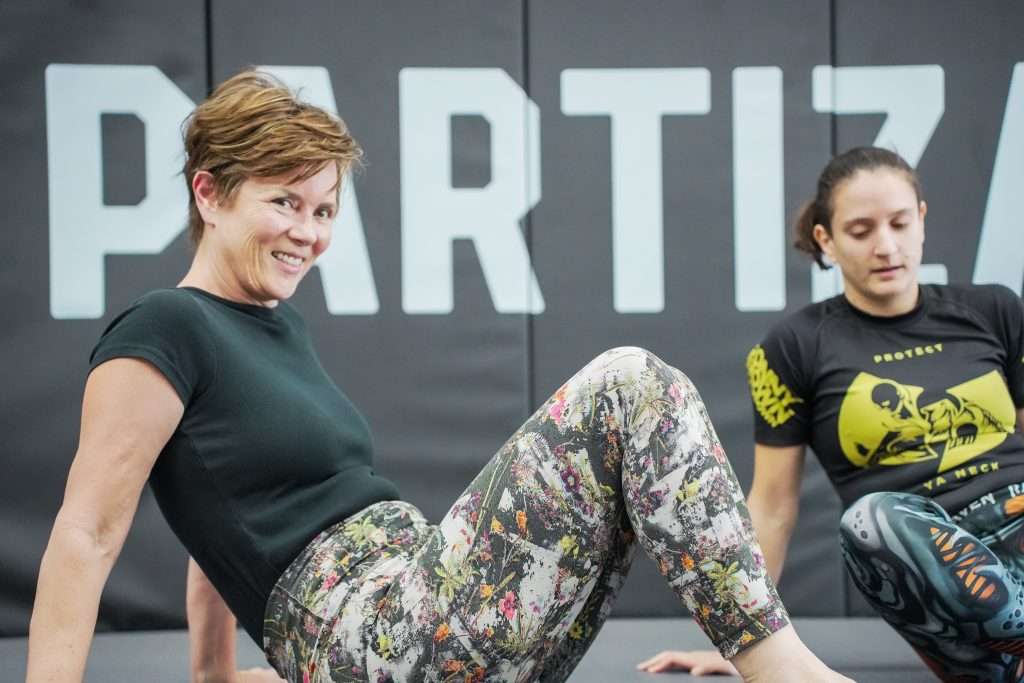
The Bottom Line
You don’t need to be fit to start BJJ. You need to be willing to suck at something publicly for several months while you gradually get less terrible.
That’s a much harder barrier than fitness, and it has nothing to do with how many push-ups you can do.
Every person training at any jiu jitsu gym right now was once exactly where you are: nervous, out of shape, and unsure if they belonged.
They started anyway. That’s the only difference between them and you.
So stop waiting to “get ready.” You won’t feel ready in three months either. You won’t feel ready in six months.
The right time to start is now. The right fitness level is whatever you currently have.
Pick a gym near you. Book a trial. Show up.
I’ll see you on the mats.
Ready to start? Partizan Grappling in Kingsford offers free trial classes for complete beginners. Located at 381 Anzac Parade, we’re 10 minutes from UNSW with easy access via the 391-396 bus routes or free street parking. No experience required. No fitness test. Just show up. Book your trial here.
Related Articles: