
You’ve seen the colored belts in Brazilian Jiu-Jitsu: white, blue, purple, brown, black. But what do these belts actually mean in terms of skill, time investment, and what you can expect at each level?
Here’s the honest breakdown of what each belt represents, how long it takes to get there, and what you’ll actually be able to do at each rank.
The BJJ Belt System Overview
Adult belts (16+): White → Blue → Purple → Brown → Black → Red/Black (coral) → Red
Kids belts (under 16): White → Grey → Yellow → Orange → Green → (transition to adult blue at 16)
Time to black belt: 10-15 years of consistent training for most people
Key difference from other martial arts: BJJ belts take MUCH longer to earn. A karate black belt might take 3-4 years. A BJJ black belt takes a decade or more.
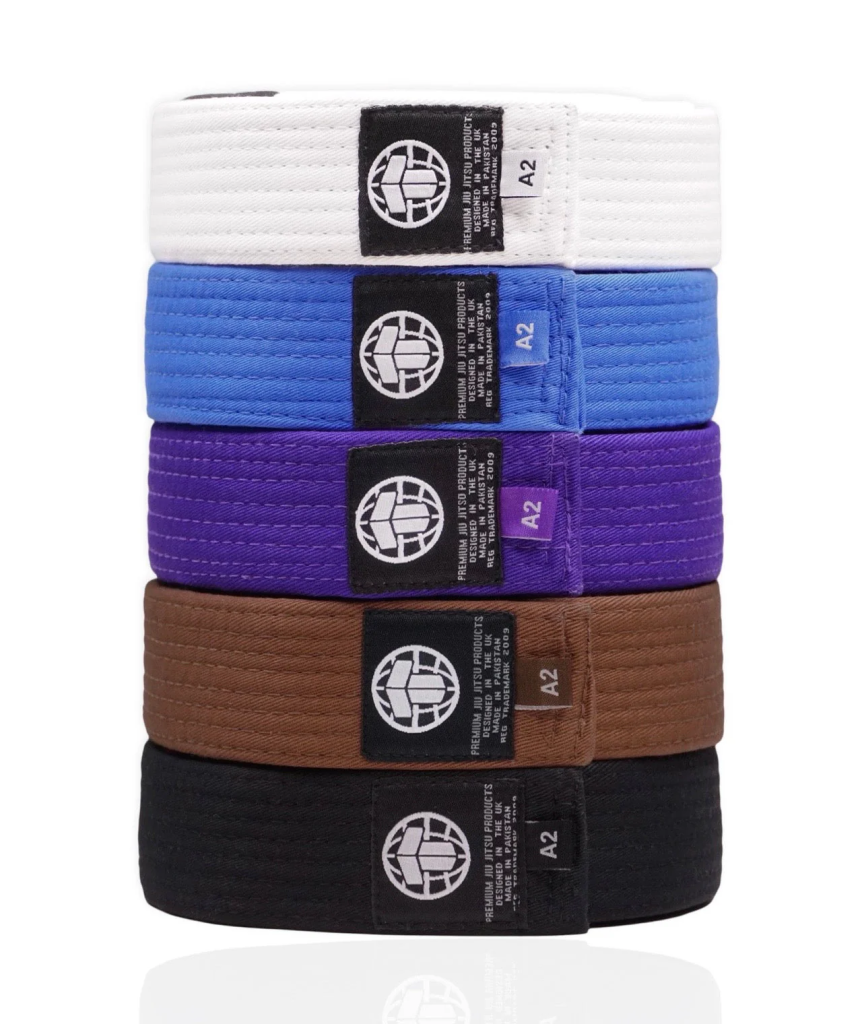
White Belt: The Beginning (0-2 years)
What It Means
You’re a complete beginner. White belt isn’t one skill level—it’s a massive spectrum from day-one beginner to near-blue belt competence.
What You Can Actually Do
Early white belt (0-6 months):
- Recognize basic positions (guard, mount, side control, back)
- Survive a few minutes against other white belts
- Attempt escapes (even if they don’t work)
Late white belt (12-24 months):
- Escape from bad positions against other white belts
- Pass guard on beginners
- Hit 3-5 submissions consistently
- Understand positional hierarchy
Against untrained people: Even a 6-month white belt can control and submit most untrained people their size through basic positional control.
Typical timeline: 18-24 months training 2-3x per week

Blue Belt: You’re Not a Beginner Anymore (2-5 years total)
What It Means
You have functional BJJ skills. You’re not good yet, but you’re competent. Blue belt is often called “the grind” because progress slows dramatically.
What You Can Actually Do
Early blue belt:
- Consistently escape bad positions
- Pass guard on white belts reliably
- Play at least one guard competently
- Chain techniques together
Late blue belt:
- Tap purple belts occasionally
- Dominate white belts easily
- Have a developed “game” (specific positions and techniques you favor)
- Can teach white belts basic techniques
Against untrained people: A blue belt can control and submit virtually any untrained person regardless of reasonable size differences. The skill gap is enormous.
Time at blue belt: 2-4 years (longest belt for most people)
The Blue Belt Crisis
More people quit at blue belt than any other rank. Progress slows, the path to purple feels endless, and real life gets in the way. If you make it past 2 years at blue belt, you’ll probably make it to purple.
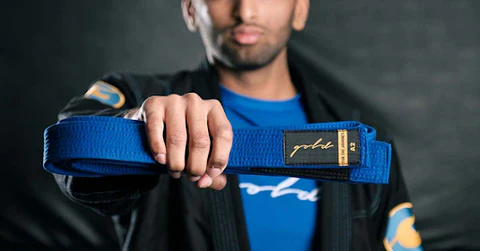
Purple Belt: You’re Actually Good (5-8 years total)
What It Means
Purple belt is where you transition from “competent” to “actually good at BJJ.” You have a developed game, can teach effectively, and understand BJJ at a conceptual level.
What You Can Actually Do
Purple belt skills:
- Effortlessly handle white belts
- Dominate most blue belts
- Have multiple positions you can play at a high level
- Understand game planning and strategy
- Teach intermediate-level concepts
Against untrained people: Complete dominance regardless of size or strength. The technical gap is insurmountable.
Time at purple belt: 2-4 years (5-8 years total training)
Philosophy shift: Purple is where many people shift from “learning techniques” to “developing a system.” You’re building interconnected sequences and strategies, not just collecting moves.
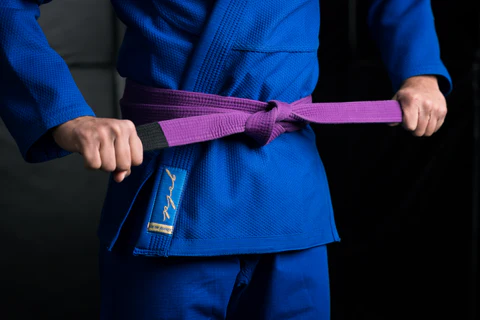
Brown Belt: Near Expert (8-12 years total)
What It Means
Brown belt is the “almost black belt” rank. You’re nearly expert-level with deep understanding and years of problem-solving experience.
What You Can Actually Do
Brown belt skills:
- Destroy anyone below brown belt
- Competitive with black belts
- Deep understanding of all positions
- Refined, efficient movement
- Strategic game planning
Time at brown belt: 1-3 years (8-12 years total training)
Brown belt is often about refinement rather than learning new techniques—polishing your game, fixing holes, and developing consistency.

Black Belt: Expert (10-15+ years total)
What It Means
Black belt is expert level. You’ve dedicated 10-15 years to BJJ. You understand the art deeply and have legitimate mastery.
Important: Black belt isn’t the end—it’s the beginning of real mastery. Many train for decades at black belt.
What You Can Actually Do
- Mastery of fundamental positions
- Can teach all levels effectively
- Deep conceptual understanding
- Refined personal style developed over years
Against untrained people: Not even remotely competitive. Like a professional boxer vs someone who’s never thrown a punch.
Timeline: 10-15 years of consistent training for most people (elite competitors: 7-10 years; casual hobbyists: 15-20+ years)
Black Belt Degrees
After black belt, you earn degrees (stripes):
- 1st degree: 3 years after black belt
- 2nd degree: 6 years total
- 3rd degree: 9 years total
Most black belts you meet are 1st-3rd degree. Higher degrees represent decades of continuous training.

Beyond Black Belt: Coral and Red Belts
Red/Black Belt (Coral): 7th or 8th degree (31-38 years at black belt minimum) – Legendary status, master instructors
Red Belt: 9th or 10th degree (41-51 years at black belt minimum) – Grand masters like Carlos Gracie Jr., Rickson Gracie
Reality: Most people will never meet a red belt. These are living legends who shaped modern BJJ.
How Long Does Each Belt Actually Take?
Realistic timeline for adults training 2-3x per week:
- White belt: 18-24 months
- Blue belt: 2-4 years at blue (3.5-6 years total)
- Purple belt: 2-4 years at purple (6-10 years total)
- Brown belt: 1-3 years at brown (8-13 years total)
- Black belt: 10-15 years total
Variables that affect timeline: Training frequency, athletic background, coaching quality, age, competition focus, natural aptitude.
[IMAGE: Timeline infographic showing average years at each belt]
Should You Care About Belts?
Yes, because:
- They mark real progress and skill development
- Promotion validates years of work
- They help structure training goals
No, because:
- Obsessing over promotion is counterproductive
- Progress matters more than belt color
- Different gyms have different standards
The mindset that works: Focus on improving your game, show up consistently, and belts will come when they come.
The Reality Nobody Tells You
Most people quit before blue belt. The difficulty and time investment are real.
Most blue belts never make purple. Life gets in the way, injuries happen, motivation fades.
The people who make black belt aren’t the most talented—they’re the most consistent. They kept showing up through career changes, growing families, aging bodies, and everything else life threw at them.
What Belt Should You Aim For?
If you’re brand new: Just aim for blue belt. Everything before that is learning to survive.
If you’re a blue belt: Purple belt is the goal. Getting there means you’re actually good at BJJ.
If you’re purple+: You’re in it for the long haul. Enjoy the process.
The truth: Most people should be thrilled to reach blue or purple belt. Those ranks represent real skill and years of dedication.
You Don’t Need a Black Belt To…
- Defend yourself effectively
- Be in great shape
- Enjoy training
- Have a deep understanding of BJJ
Train because you enjoy it, not because you’re chasing a belt.
Ready to start your BJJ journey in Sydney? Try a free class at Partizan Grappling in Kingsford. We focus on skill development over belt chasing—progress at your own pace with no contracts or pressure.