
The ideal age to start BJJ is 5-6 years old.
Can younger kids start? Sometimes. Can older kids start? Absolutely.
But if you’re asking “when is the sweet spot?” – it’s around 5-6 years old, and I’ll explain exactly why.
I run a grappling academy in Sydney where our head kids coach, Romina Titanti (a judo and BJJ black belt), has taught hundreds of children. Here’s what we’ve learned about age, readiness, and realistic expectations.
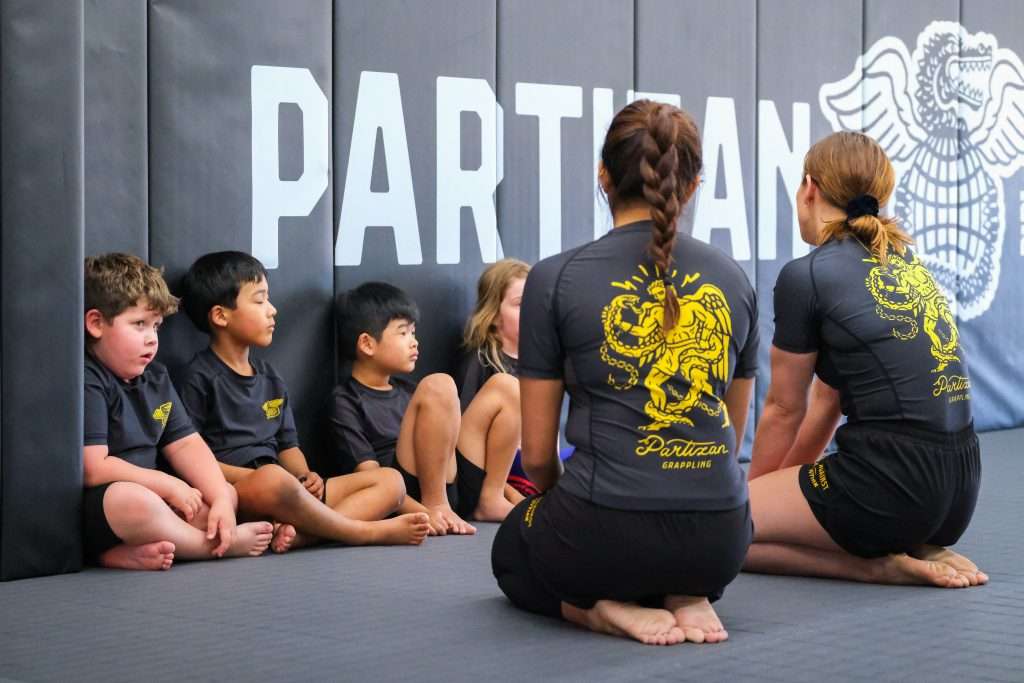
Why 5-6 Years Old Is the Sweet Spot
At 5-6 years old, most kids have developed:
Basic body awareness. They can follow multi-step instructions like “sit down, then stand up, then jump.” They understand left from right (mostly). They can coordinate their movements somewhat intentionally.
Attention span. They can focus on a task for 5-10 minutes before needing to switch activities. This is just enough to learn a simple technique before moving to the next drill.
Social skills. They understand the concept of taking turns, working with a partner, and following a coach’s instructions. They’re starting to move beyond pure parallel play.
Emotional regulation. They can handle minor frustration without completely melting down. They’re beginning to understand that losing or struggling is temporary, not catastrophic.
Physical capability. They’re past the toddler wobble stage. They can run, jump, roll, and control their bodies with reasonable success.
This combination makes them coachable. Before this age, you’re mostly just doing movement games and hoping they absorb something. After this age, you can actually teach jiu jitsu.
What About Starting Younger (3-4 Years Old)?
Some gyms offer “Little Champions” or “Tiny Tigers” programs for 3-4 year olds.
Can it work? Sometimes. Is it necessary? No.
The reality: At 3-4 years old, you’re not really teaching jiu jitsu. You’re teaching basic motor skills disguised as martial arts. Rolling around on mats, learning to fall safely, following directions, taking turns.
These are valuable skills. But you could get the same benefits from gymnastics, swimming lessons, or playing at a park.
If your child is exceptionally mature for their age and you have a gym that specializes in very young kids, go for it. But don’t feel like you’re “behind” if you wait until 5-6. You’re not missing a critical development window.
At Partizan, we start at age 5 because that’s when kids can meaningfully engage with actual jiu jitsu concepts, not just movement games.
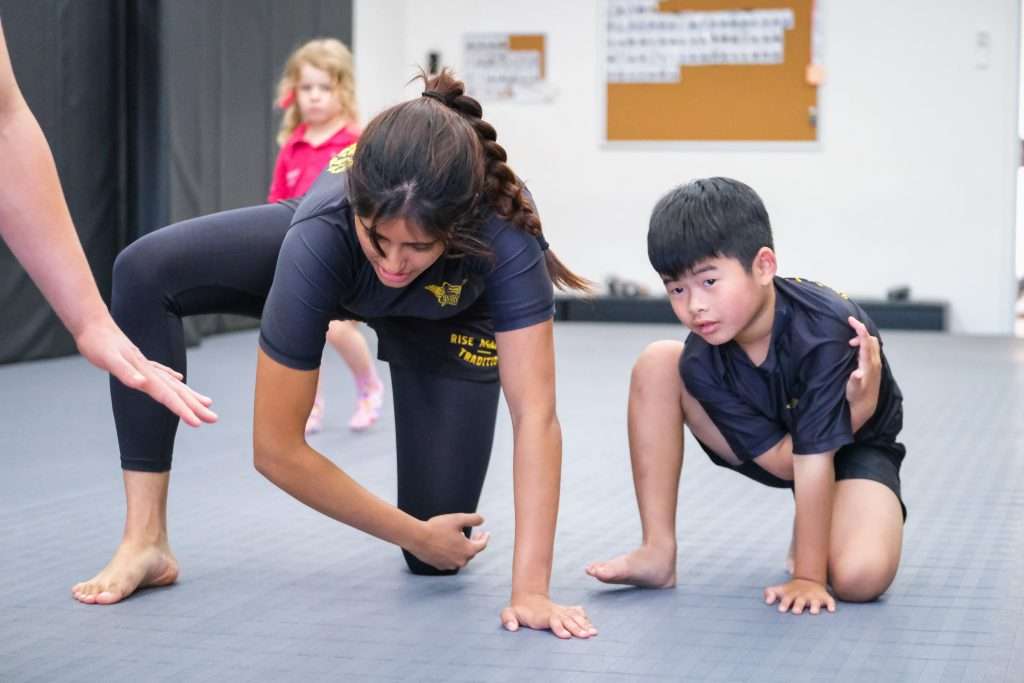
What About Starting Older (7-12 Years Old)?
This is ideal in many ways.
Kids starting at 7-8 years old often progress faster than kids who started at 5. Why? Better attention span, stronger bodies, more emotional maturity, and better problem-solving skills.
They can understand concepts like leverage, base, and pressure. They can remember techniques from week to week. They can handle losing without emotional collapse.
Kids starting at 9-12 years old do even better. They have the cognitive ability to understand why techniques work, not just memorize movements. They can apply concepts across different situations.
Starting later isn’t a disadvantage – it’s often an advantage in terms of learning efficiency.
The only “disadvantage” is that kids who started younger have more years of experience. But honestly? A 10-year-old who started at 9 will often be more technical than a 10-year-old who started at 5, simply because they learn faster at an older age.
What About Teenagers (13+)?
Teenagers can absolutely start jiu jitsu and many do.
At this age, they:
- Learn extremely quickly (fastest learning period for most kids)
- Have adult-like strength and coordination
- Can train with adults if needed
- Understand abstract concepts easily
- Can set their own goals and stay motivated
The challenge with teenagers isn’t capability – it’s social anxiety and peer pressure.
A 14-year-old starting jiu jitsu might feel self-conscious being a beginner when there are 9-year-olds with more experience. They might worry about looking uncoordinated in front of peers.
The solution: Find a gym with a strong teen program where they’re training with other teens, not just mixed in with younger kids or adults. The social environment matters enormously at this age.
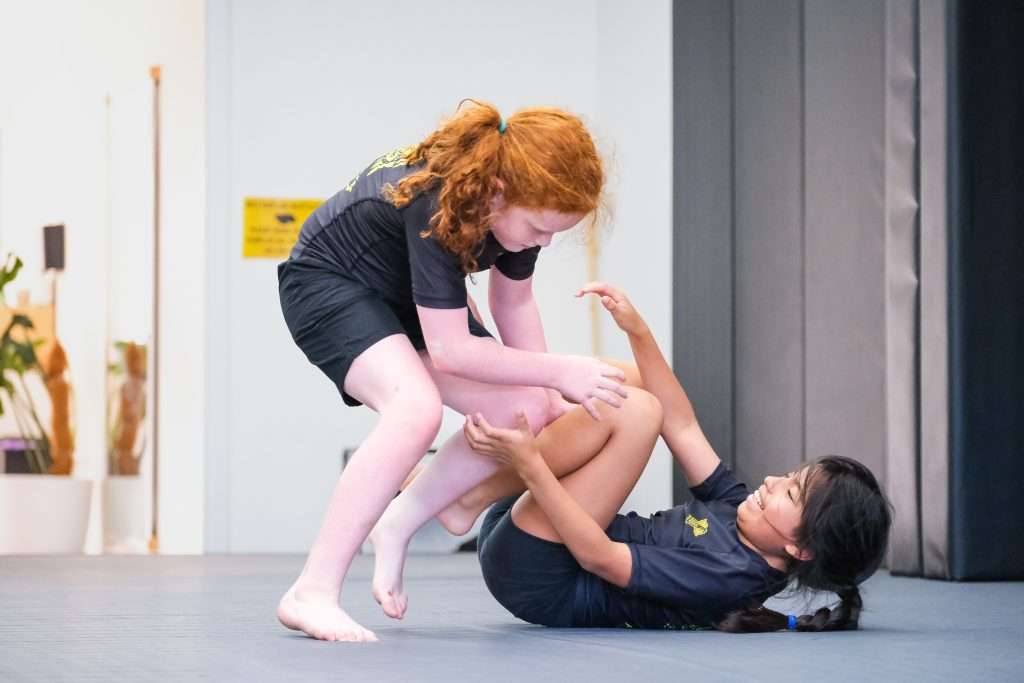
The Readiness Checklist (More Important Than Age)
Age is just a number. Here’s what actually matters:
Your Child Can Start BJJ If They Can:
Follow multi-step instructions. “Go grab a partner, sit down facing them, then give them a high-five.” If they can do this, they’re ready.
Take turns. One person goes, then the other person goes. This is fundamental to drilling techniques with a partner.
Handle minor frustration. They get stuck in a position, struggle a bit, then reset without crying or quitting. Some frustration is fine—total meltdown means they’re not ready yet.
Separate from parents for 45-60 minutes. Most kids classes don’t allow parents on the mat. If your child can’t be away from you for an hour, wait a bit longer.
Listen to non-parent authority figures. They can follow instructions from a coach they’ve just met.
If your child can do these five things, they’re ready regardless of exact age.
What Different Ages Actually Look Like in Class
Here’s the reality of teaching different age groups:
5-6 Year Olds (Juniors)
- Attention span: 5-10 minutes per activity
- What they learn: Basic positions (mount, side control), very simple escapes, how to fall safely, how to work with a partner
- Class structure: Short technique demos, lots of games, frequent activity changes, maximum 30-45 minutes
- Realistic expectations: They’re building a foundation. Don’t expect them to “get good” at jiu jitsu yet. They’re learning to learn.
7-9 Year Olds
- Attention span: 10-15 minutes per activity
- What they learn: Fundamental positions, basic submissions (usually not chokes), positional escapes, simple sweeps
- Class structure: Technique instruction, partner drilling, light positional sparring, 45-60 minutes
- Realistic expectations: This is where real jiu jitsu learning begins. They’ll develop recognizable skills over 6-12 months.
10-12 Year Olds
- Attention span: 15-20 minutes per activity
- What they learn: Complete beginner curriculum including submissions, more complex sequences, strategic thinking
- Class structure: Similar to adult beginner classes with age-appropriate intensity, 60 minutes
- Realistic expectations: They can become legitimately skilled within a year. Some will be ready to train with adults.
13+ Year Olds (Teens)
- Attention span: Similar to adults
- What they learn: Full jiu jitsu curriculum, can handle advanced concepts
- Class structure: Often train in adult classes or dedicated teen classes, 60-75 minutes
- Realistic expectations: Progress as fast as adult beginners, sometimes faster.
The “But My Kid Is Different” Factor
Every parent thinks their child is exceptionally mature, focused, and ready for things earlier than average.
Sometimes that’s true. Usually it’s not.
Here’s the test: Bring your child to watch a class. Not participate – just watch for 20 minutes.
Can they sit still and pay attention? Do they seem engaged with what’s happening? Are they asking questions about the techniques?
If yes, they might be ready even if they’re on the younger side.
If they’re running around, completely distracted, or showing zero interest, wait six months and try again.
What Good Kids Programs Look Like
Not all kids BJJ programs are created equal. Here’s what to look for:
Age-appropriate groups. A good gym separates 5-6 year olds from 10-12 year olds. They need different teaching approaches and intensity levels.
Experienced kids coaches. Teaching kids is a completely different skillset than teaching adults. At Partizan, Romina specializes in kids instruction specifically—she’s a judo and BJJ black belt with years of experience making martial arts engaging for children.
Games-based learning for younger kids. The best kids classes disguise learning as play. “Shark attack” is a guard retention drill. “Crazy legs” is a hip escape drill. Kids are learning jiu jitsu while thinking they’re just having fun.
Progressive curriculum. Not just random techniques each week. A structured program where skills build on each other logically.
Emphasis on safety and respect. Kids learning how to train safely, tap when caught, and respect training partners. This is more important than technical skill.
Parents can watch but not interfere. You should be able to observe, but coaches should be managing the class, not you.
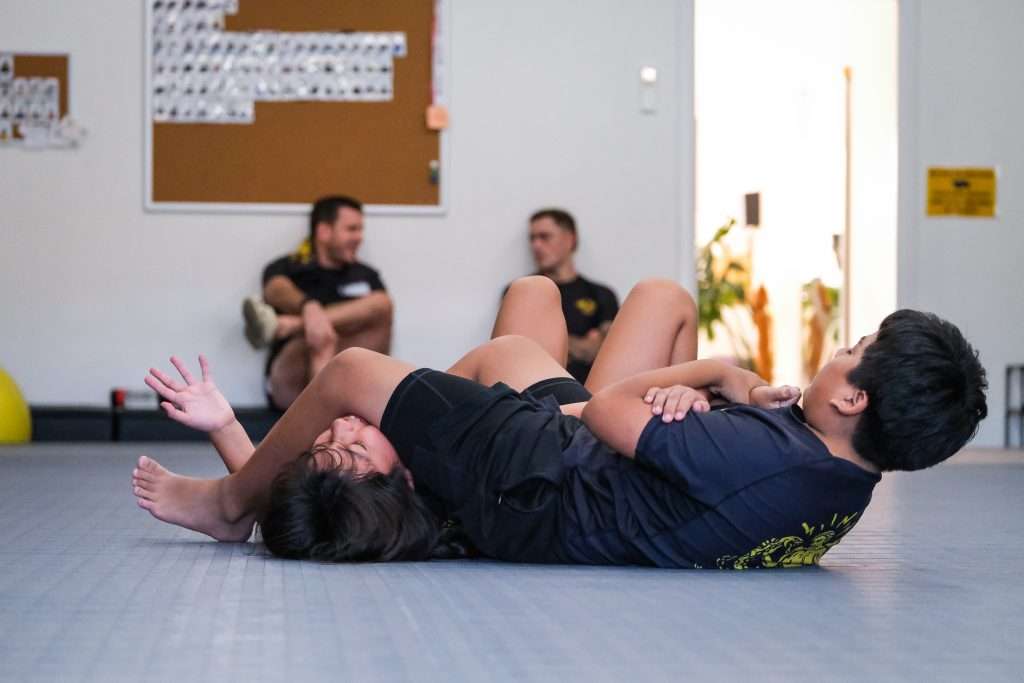
Common Parent Concerns
“Will my child get hurt?”
Minor bumps and bruises, yes. Serious injuries in kids BJJ are extremely rare when coached properly. Kids are naturally flexible and resilient. They’re also usually not going hard enough to cause damage.
“My child is small/big for their age. Will that matter?”
Not really. Jiu jitsu is especially good for kids who are smaller or less athletic because it teaches them to use technique over strength. Bigger kids benefit too—they learn they can’t just muscle through everything.
“Will it make my child more aggressive?”
No. The opposite usually happens. Kids who train jiu jitsu have an outlet for physical energy and learn controlled aggression. They tend to be less reactive and better at managing emotions.
“How long until they get good?”
Define “good.” After 6 months, they’ll understand basic positions and be competent at controlled sparring with other beginners. After 2-3 years, they’ll be legitimately skilled.
“Should they compete?”
Not necessary. Some kids love competition, some hate it. Both are fine. Don’t push it unless they’re genuinely interested.
Starting BJJ as a Family
Some families train together – parents and kids both doing jiu jitsu.
This can be amazing. Shared interest. Shared language around the sport. Quality time together before and after classes.
But don’t force it. If your kid loves BJJ and you have zero interest, that’s fine. Let them have their own thing.
If you both want to train, many gyms in Sydney offer family classes or back-to-back adult and kids sessions.
The Bottom Line
- Best age to start: 5-6 years old
- Too young: Under 4 (unless exceptionally mature)
- Perfect age: 7-12 years old
- Still great: 13+ as teenagers
But honestly, the “right age” is whenever your child shows interest and meets the readiness criteria.
Don’t stress about starting at the “optimal” age. Kids who start at 5 aren’t dramatically better than kids who start at 8. They just have more years of experience, not some irreplaceable developmental advantage.
If your child is curious about jiu jitsu, find a good gym with a solid kids program and try a class. If they love it, great. If not, try again in six months.
The worst thing you can do is force them before they’re ready, creating negative associations with training.
I’ll see you (and your kids) on the mats.
If you’re in Sydney and looking for kids jiu jitsu classes, Partizan Grappling in Kingsford offers programs for ages 5-15, taught by head kids coach Romina Titanti (judo and BJJ black belt). We focus on age-appropriate instruction, safety, and making training genuinely fun. Free trial classes available for kids.